For the business owner who wants a website that works as hard as they do — and realises “just getting a designer” isn’t enough.
Step 1: Define Your Visitor’s Identity
You can’t build a website for “everyone.” You need one clear, specific visitor profile.
- Pinpoint their starting point: What’s frustrating them right now?
- Define their aspiration: Who do they want to be after solving this problem?
- Craft your hook: A headline that instantly says “This is for me”.
💡 Smart Tip: Create a mini persona board with a photo, key quotes, and emotional triggers. Keep it in front of you while planning — it stops you from drifting into “design for me” instead of “design for them.”
Step 2: Map the Emotional Journey
Strategic websites are built around feelings — because emotions drive action. Your visitor’s journey might look like:
- Understood → You “get” their problem
- Hopeful → There’s a clear way forward
- Confident → You have proof and credibility
- Compelled → Now is the time to act
💡 Smart Tip: Make a content map where each section of your site is tagged with the emotion it should trigger — then match the copy, images, and calls-to-action to that emotion.
Step 3: Build Trust Signals Into the Design
Trust isn’t earned in a paragraph — it’s earned in moments. Include:
- Testimonials relevant to the visitor’s situation
- Certifications or industry memberships
- Case studies with real numbers
- Security badges and guarantees near conversion points
💡 Smart Tip: Don’t dump all testimonials on one page — scatter them where objections are most likely to pop up.
Step 4: Analyse Your Competitors
Not to copy them — to position yourself differently.
- What do they promise?
- What’s missing in their messaging or offer?
- Where do they create friction you could remove?
💡 Smart Tip: Make a side-by-side positioning grid with 3–5 competitors and score them on trust, clarity, and differentiation. You’ll see where you can win.
Step 5: Plan the Conversion Flow
Every page should lead to one clear action.
- Choose the one thing you want each page to achieve
- Remove competing calls-to-action
- Place persuasion triggers (social proof, urgency, guarantees) before decision points
- Design for mobile-first
💡 Smart Tip: Use wireframes before you touch design — even just hand-drawn boxes. They’ll save you endless revisions later.
Step 6: Align Design with Psychology
Every visual choice should be deliberate:
- Colours: Pick to trigger the right emotions (blue = trust, orange = energy, etc.)
- Fonts: Match your audience’s expectations for professionalism or playfulness
- White space: Makes your content feel premium and easy to digest
- Images: Show your visitor’s aspirational identity, not just product shots
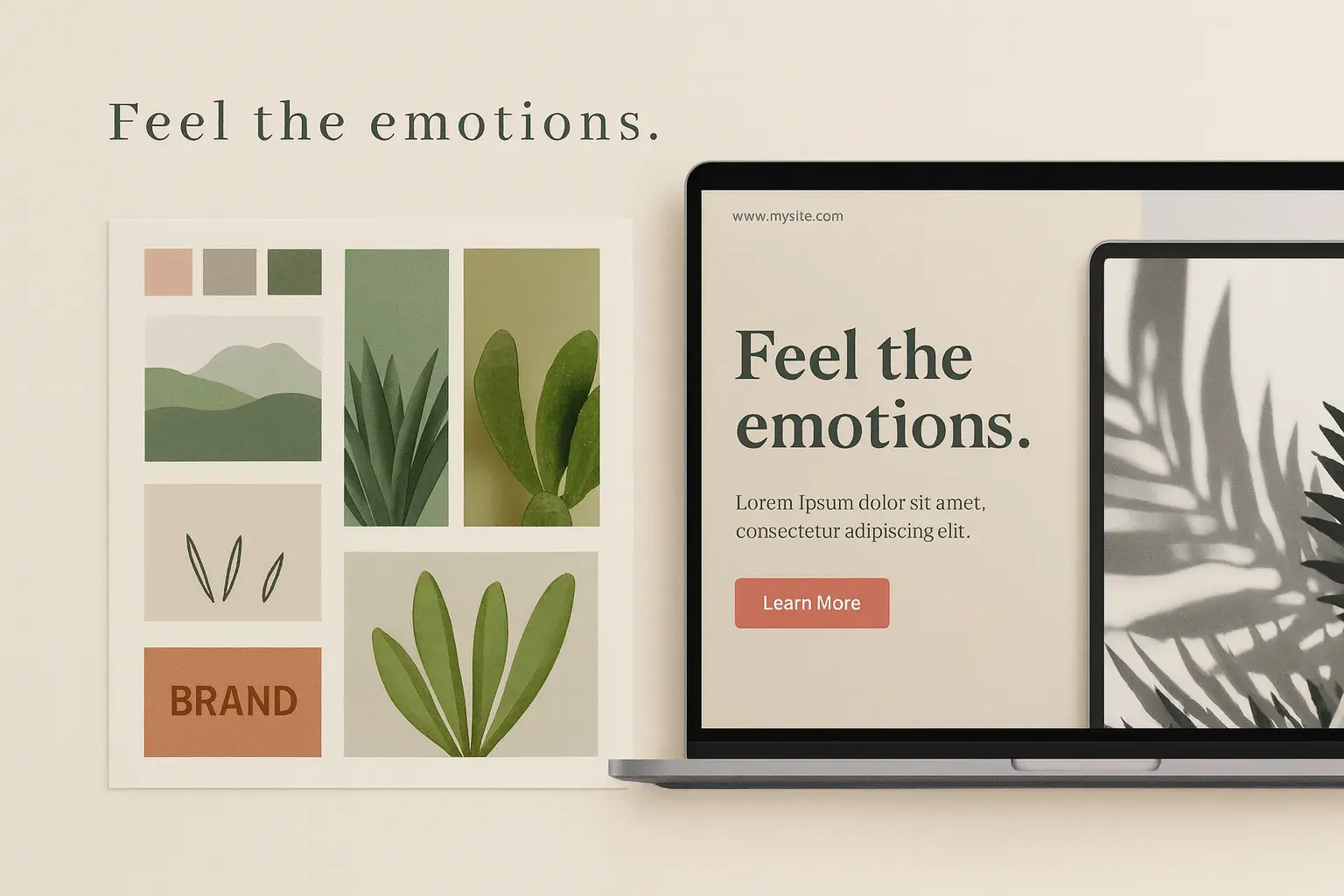
💡 Smart Tip: Make a mood board in Pinterest or Canva. Include colours, typography, imagery, and even textures that reflect your brand’s psychology.
Step 7: Translate Into a Developer-Ready Plan
Your plan should leave no room for guesswork:
- Final copy matched to each wireframe section
- Technical brief with performance and SEO requirements
- Notes on animations, transitions, and interactive elements
- A checklist of trust signals and psychological triggers to implement
💡 Smart Tip: Create a “handover pack” — it makes developers faster, happier, and less likely to miss critical details.
Reality Check
Doing all this properly is dozens of hours of strategy work — before you write a single line of code. Most business owners skip steps (or don’t know they exist), which is why so many sites look fine but fail to convert.
The Shortcut Without Cutting Corners
DriftDraft compresses this entire process into a guided tool:
- Asks the right questions about your business and audience
- Builds your identity profile, emotional map, trust plan, competitor positioning, and conversion flow
- Produces a developer-ready strategic blueprint in minutes
You get the full depth of a professional planning process — without becoming your own web strategist.